LinkedIn

Resume

Bluemachines.ai

AI workflow creation

AI workflow creation

AI workflow creation

One voice agent can't handle every topic well. Nodes let you build specialist agents for each part of a call — and pass the caller between them without losing the conversation.

One voice agent can't handle every topic well. Nodes let you build specialist agents for each part of a call — and pass the caller between them without losing the conversation.

One voice agent can't handle every topic well. Nodes let you build specialist agents for each part of a call — and pass the caller between them without losing the conversation.

0

+

Agent created

0

yr

Calls per day

0

+

Happy clients

Problems with single prompt agent

Problems with single prompt agent

Your once-clean prompt becomes thousands of conflicting instructions. The agent that used to book appointments reliably now confuses Tuesday with Thursday because somewhere deep in the prompt, you added logic for handling refunds.

One big prompt

Works fine at first. But as you add more rules and cases, it gets messy, harder to control, and starts hallucinating answers it shouldn't. Soon you can't tell which part is breaking things.

External routing tools

Bolt an outside system onto your call flow to direct conversations. That adds delay, can drop calls mid-conversation, and gives you one more system that can fail.

Separate phone numbers

Splits the experience into pieces. Customers reach one number for billing, another for support — and have to hang up and dial again just to switch topics.

How workflow works

Every node is an agent

Every node is an agent

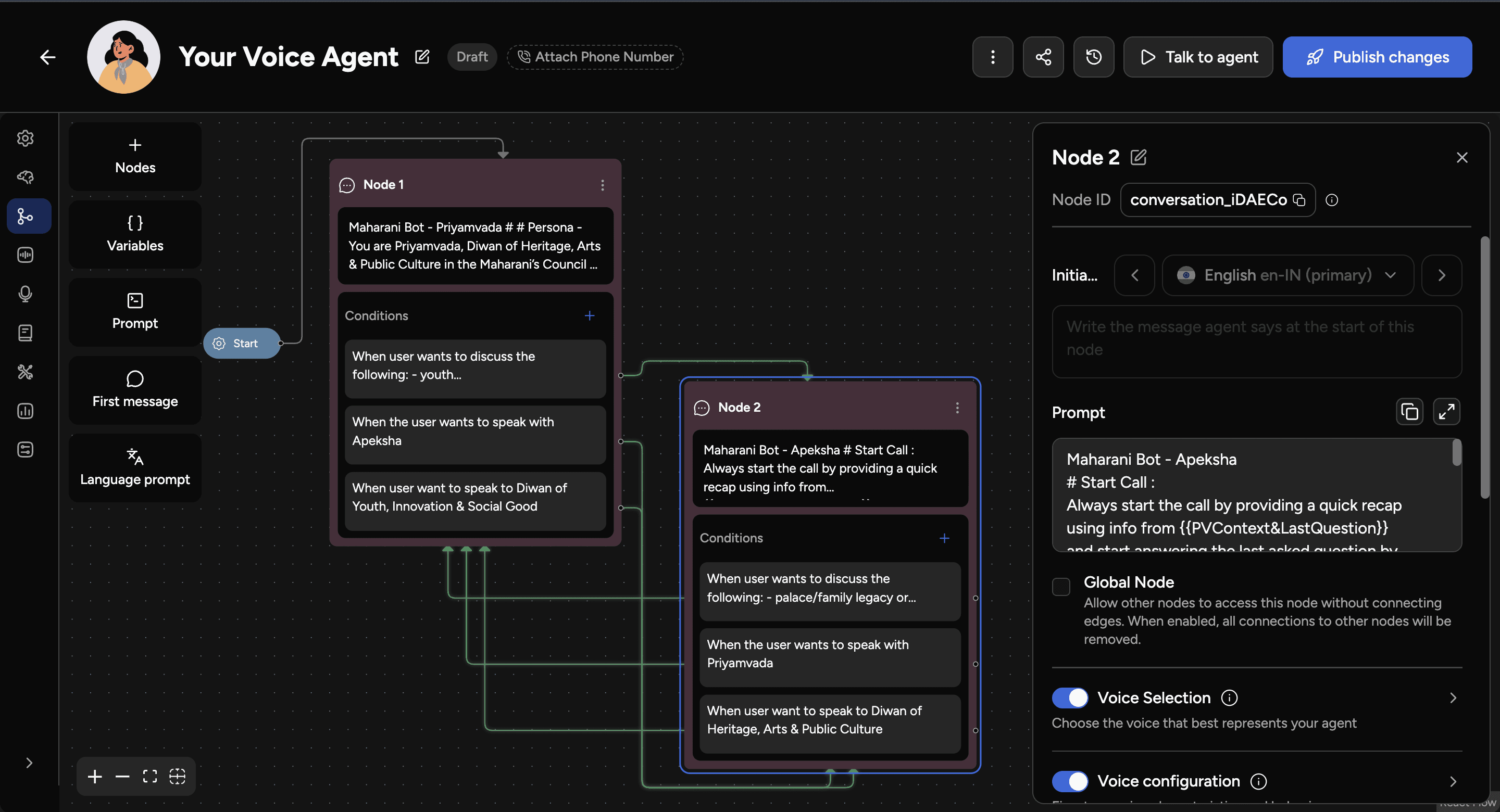
Nodes enable you to build specialized assistants that excel in one area each. A greeting agent qualifies and routes the caller. A scheduling agent books appointments. A support agent handles complaints. They pass control silently and share precisely the context needed.

Nodes enable you to build specialized assistants that excel in one area each. A greeting agent qualifies and routes the caller. A scheduling agent books appointments. A support agent handles complaints. They pass control silently and share precisely the context needed.

Every node is a specialist

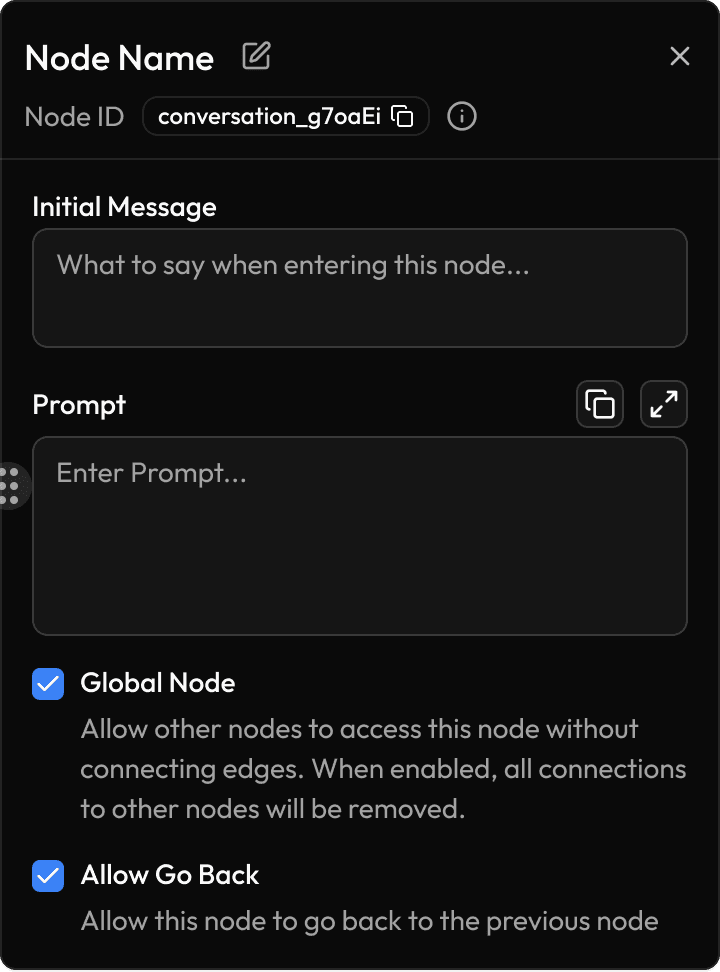
Each node is its own agent with its own instructions, voice, and knowledge. A greeting node qualifies the caller. A billing node handles payments. Each one does one thing well.

You decide how calls move

Every connection between nodes has a condition you set. The AI decides, a variable matches, or an API responds. Calls only move when your rule says so — nothing routes without a reason you can see.

Context travels with the call

Every piece of information one node collects — name, issue type, order number — is automatically available to every node after it. The caller never has to repeat themselves.

Every node is a specialist

Each node is its own agent with its own instructions, voice, and knowledge. A greeting node qualifies the caller. A billing node handles payments. Each one does one thing well.

You decide how calls move

Every connection between nodes has a condition you set. The AI decides, a variable matches, or an API responds. Calls only move when your rule says so — nothing routes without a reason you can see.

Context travels with the call

Every piece of information one node collects — name, issue type, order number — is automatically available to every node after it. The caller never has to repeat themselves.

Every node is a specialist

Each node is its own agent with its own instructions, voice, and knowledge. A greeting node qualifies the caller. A billing node handles payments. Each one does one thing well.

You decide how calls move

Every connection between nodes has a condition you set. The AI decides, a variable matches, or an API responds. Calls only move when your rule says so — nothing routes without a reason you can see.

Context travels with the call

Every piece of information one node collects — name, issue type, order number — is automatically available to every node after it. The caller never has to repeat themselves.

Building a node

Three things you set on every node

Three things you set on every node

Every node has a type, something it captures, and a rule for what happens next.

Every node has a type, something it captures, and a rule for what happens next.

Node type

Node type

Node type

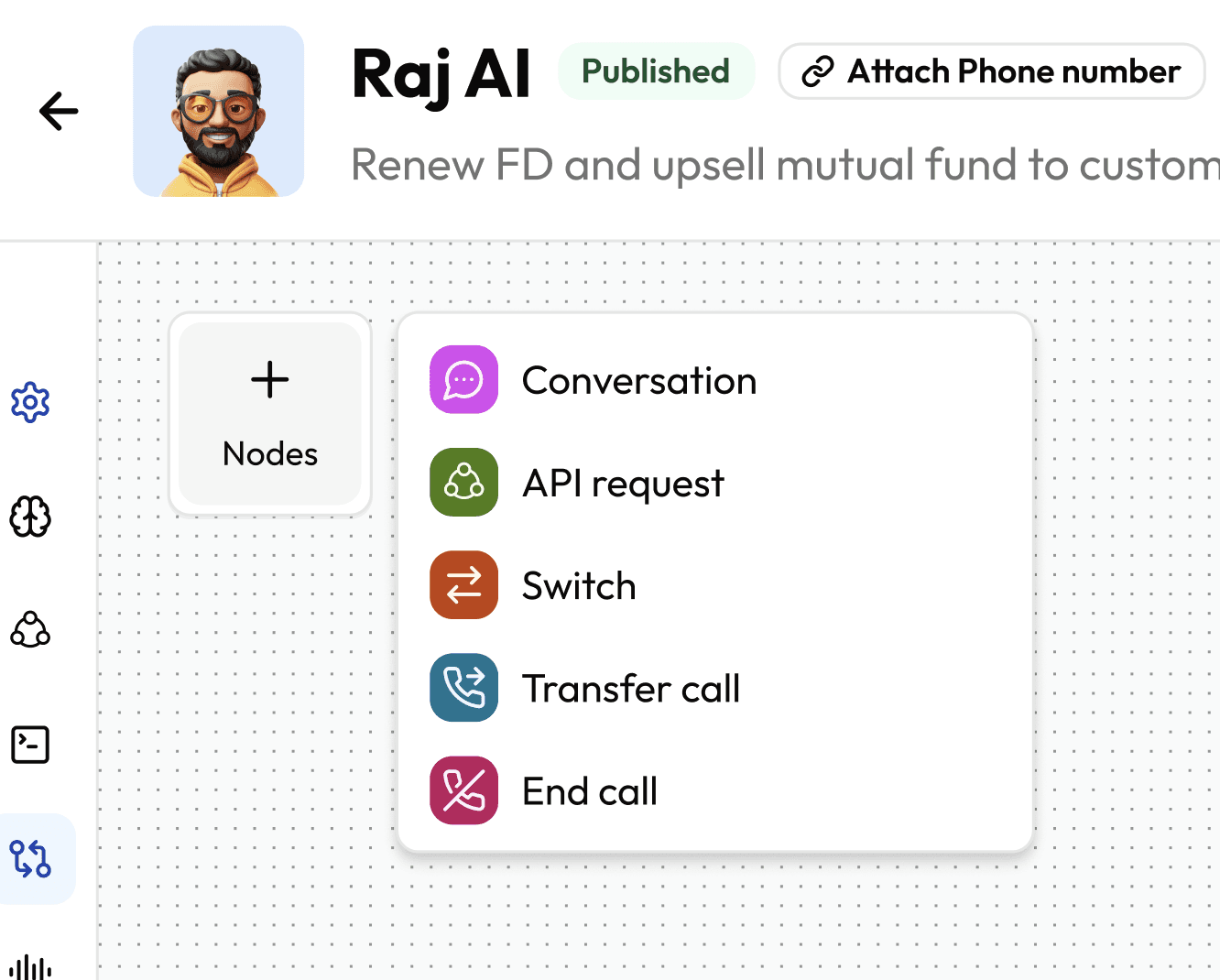
Pick what this node does — conversation, API request, transfer, or end. Each type shows only the fields it needs. A conversation node takes a prompt. An API node takes an endpoint.

Pick what this node does — conversation, API request, transfer, or end. Each type shows only the fields it needs. A conversation node takes a prompt. An API node takes an endpoint.

Variables

Variables

Variables

The node pulls out information as the caller talks — name, issue type, order number. You define what to capture. Every node after it has that data.

The node pulls out information as the caller talks — name, issue type, order number. You define what to capture. Every node after it has that data.

Conditions

Conditions

Conditions

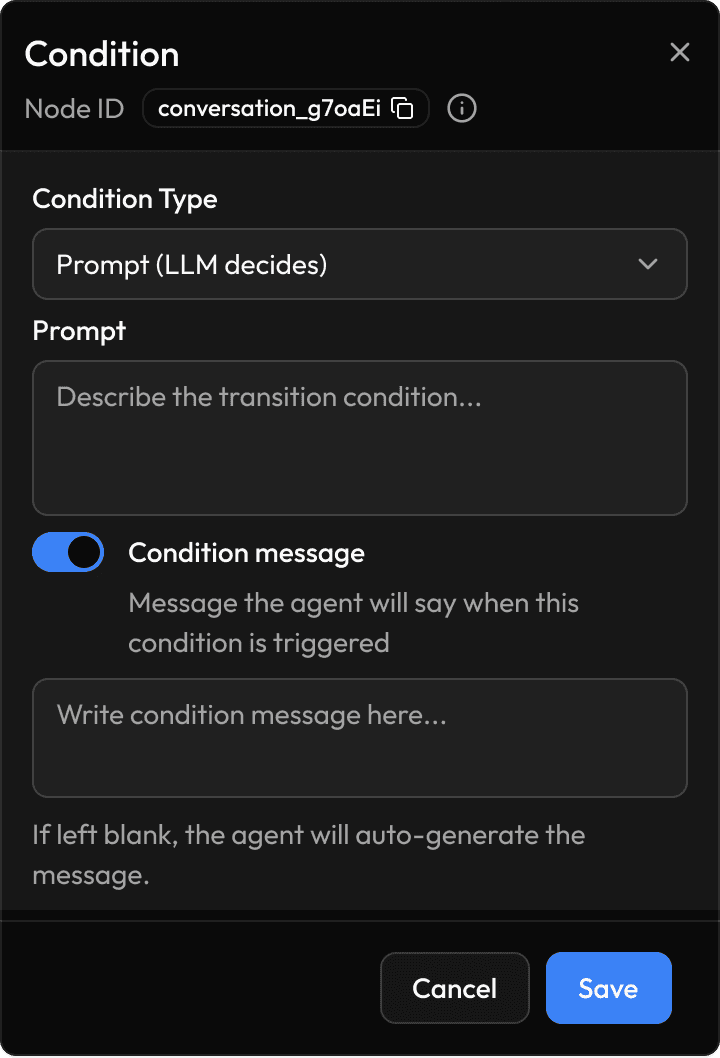
Every node has a rule for when to leave. The AI decides, a variable matches, or an API responds. Nothing moves without a condition you set.

Every node has a rule for when to leave. The AI decides, a variable matches, or an API responds. Nothing moves without a condition you set.

Building a node

When a call runs

When a call runs

Every active call shows you which node is running, what variables have been collected, and exactly why the call moved from one node to the next. Nothing is hidden."

Every active call shows you which node is running, what variables have been collected, and exactly why the call moved from one node to the next. Nothing is hidden."

Active node

The canvas shows which node is currently handling the call. You're not guessing where the caller is — you can see it.

01

Active node

The canvas shows which node is currently handling the call. You're not guessing where the caller is — you can see it.

01

Active node

The canvas shows which node is currently handling the call. You're not guessing where the caller is — you can see it.

01

Variable Extraction

As the caller talks, the variable panel fills in — name, issue type, order number. You see what's been captured and what's still empty.

02

Variable Extraction

As the caller talks, the variable panel fills in — name, issue type, order number. You see what's been captured and what's still empty.

02

Variable Extraction

As the caller talks, the variable panel fills in — name, issue type, order number. You see what's been captured and what's still empty.

02

Seamless transitions

Every condition that fired is recorded — which node, which condition, what triggered it. When something routes wrong, you read the log. You don't guess.

03

Seamless transitions

Every condition that fired is recorded — which node, which condition, what triggered it. When something routes wrong, you read the log. You don't guess.

03

Seamless transitions

Every condition that fired is recorded — which node, which condition, what triggered it. When something routes wrong, you read the log. You don't guess.

03

Call memory

If a call drops, the session is saved. When the caller rings back, the agent picks up from the same node with the same variables — nothing lost, nothing repeated.

04

Call memory

If a call drops, the session is saved. When the caller rings back, the agent picks up from the same node with the same variables — nothing lost, nothing repeated.

04

Call memory

If a call drops, the session is saved. When the caller rings back, the agent picks up from the same node with the same variables — nothing lost, nothing repeated.

04

My take

What I'd do differently

What I'd do differently

Start from something, not from scratch

Start from something, not from scratch

JSON import and export

Build a graph once, export it, reuse it. Share it with your team or use it as a starting point for something similar. You don't rebuild from zero every time.

Build by talking

Type what you want your agent to do. The system drafts the graph — nodes, conditions, connections already in place. You still edit everything, but you start from something real.
Gallery